

Written by: Nick Chocko

At the northern edge of South America, a parched and windswept land juts into the muted-blue Caribbean Sea. Named La Guajira, this region is one of the driest on the continent. This desert is impervious and indifferent. For centuries it has been home to an equally self-reliant people: the Wayuu. Fishermen and goat herders by trade, they resisted Spanish conquest and still to this day self-govern through the Law of the Wayuu.
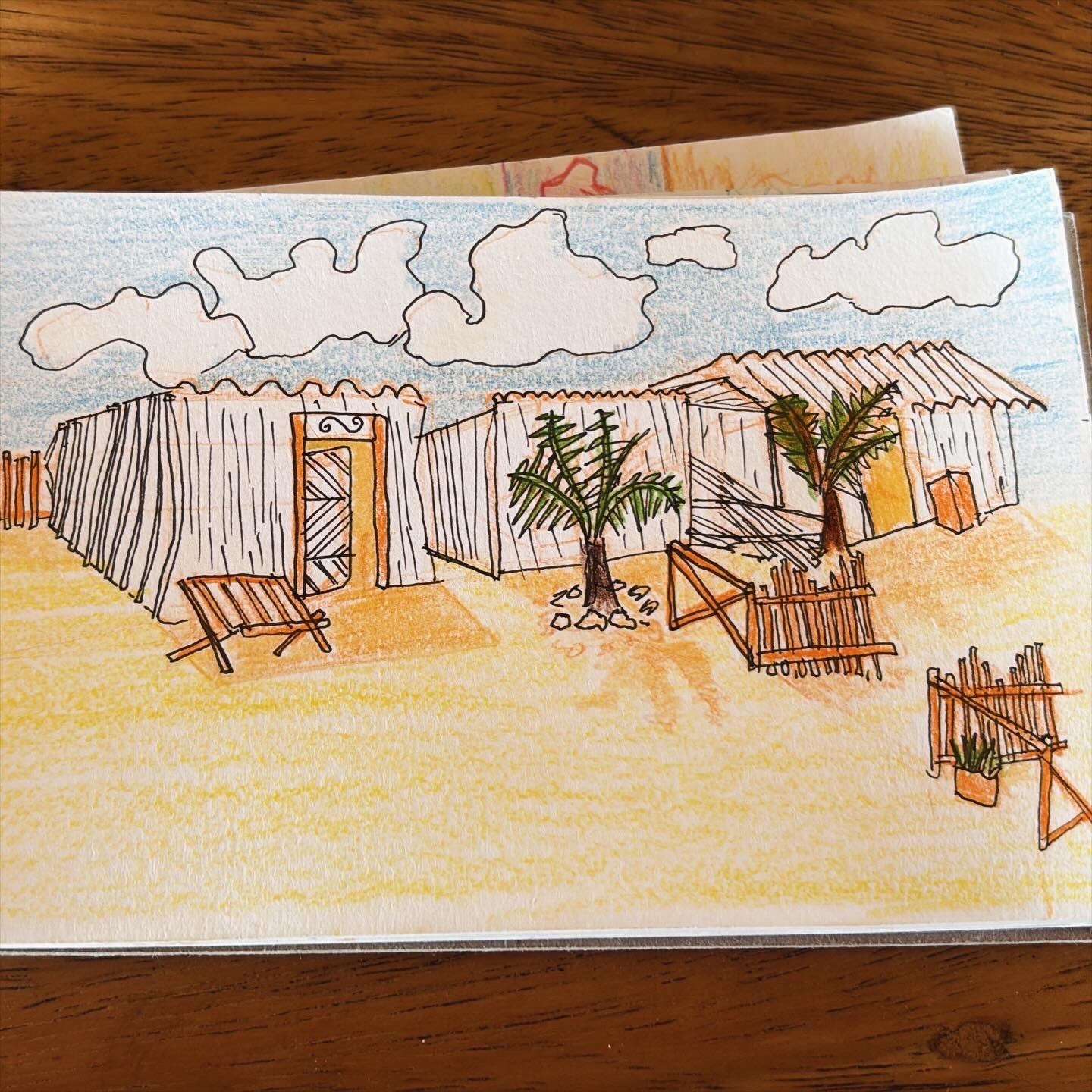
Tucked away in the desert is a dusty, one-street village along the northern coast. Cabo de la Vela, as it’s named, sits where the trade winds funnel between land and sea. The steady wind howls as it sweeps past the stick-built bungalows and heads offshore, flattening the water. The result is a shallow, glassy sea, perfectly suited for kite surfing almost year-round. Local riders go big – regularly launching twenty to thirty feet into the air. These conditions have made Cabo de la Vela a sort of pilgrimage, drawing back those who are in-the-know year after year.


This village, however, is not easy to reach. Harder still to absorb. Travelers who make the journey often find themselves disconcerted by the depth of poverty and apparent lack of law in this region. Passing through the city of Uribia, wind whips dust and trash through the empty streets in the heat of day. Most people seem to spend life indoors, behind locked gates. Water is distributed in plastic bags, and smuggled fuel in empty soda bottles. Further along the route to Cabo de la Vela, the road becomes a patchwork of deep craters. Drivers snake along the dirt road at high speeds, and seem to play a game of chicken for thrills. Turning off the main road, local families send their children to set up roadblocks of string and trash as an attempt to extort travelers for money and supplies. The daily drivers will plow through these roadblocks unforgivingly.

Although the Colombian coast stretches long, and kiting opportunities abound, Cabo de la Vela stands apart for one simple reason – that’s what people are there to do. Elsewhere, kite surfing competes with sunbathing tourists, partying colombianos, beach clubs and coco locos. In Cabo, it’s just you, the kite, and the wind.
Many travelers will spend their nights sleeping in a hammock on the beach. And sure as the rising sun, you will be greeted by little old ladies each morning, displaying their woven bags on top of you whilst you only try to rest. After you kindly decline to make a purchase, they typically will retreat to a shaded corner of your outdoor room, and spend the morning weaving even more bags. It’s a bit intrusive, but who’s to blame them? In this desert, there aren’t many places to go. And actually, these abuelitas as they are called, can weave you anything under the sun. Custom hats and sombreros, chums for your sunglasses, even an entire hammock in an array of different colors and patterns. That is, if you have a week to wait.

Kite surfing is an expensive sport to learn. Rates were about $65 USD per hour for coaching, and most students need 12-15 hours before feeling comfortable to practice on their own. What makes the sport so difficult to learn is that you need to understand how to orchestrate the kite, and effectively maneuver the board, in agreement with each other. There are a lot of variables to consider and it feels like learning two sports at once.
Learning the sport has been on my radar for a number of years. I’ve been paragliding for the past five, and as my gear starts to wear out, I find myself in search of learning another wind sport. There’s something magical about being able to harness the invisible power of the wind.

Having spent these years kiting along with a lifetime of practicing board sports, I was determined and confident to quickly reach a level of competency needed in order to rent equipment without further coaching. A belief which, in a rather short period of time, worked to my eventual detriment.
It took me just seven hours of lessons. There was a whole lot of self-inflicted water boarding, my head bobbing into the salty sea with eyes wide-open while I focused on keeping my kite aloft. But fast iterations along with focused and sometimes blunt coaching advanced me through the curriculum. By the end of day three. I was ready to rent on my own.

I still didn’t know exactly what I was doing. In fact I was bailed out by a boat once or twice -a local on a dinghy that would go out and retrieve me from the sea for a modest fee. In this offshore wind, a few consecutive mistakes will push you pretty far out to sea. Oh, and the water boarding did continue. But each session was one step back, two steps forward. And each day that I improved, so did my excitement for the sport.

Once you get a bit comfortable, and feel balanced and athletic on the board, it doesn’t seem too hard to launch into the air and fly high above the water. And it’s a feeling I was all too used to from my previous paragliding pursuits. Just lean hard against the kite, work some magic with the strings, and release the tension.
I’m no expert, but it seemed to work for me. And it was exciting. I was launching into the air by day four of rentals. And why not? It seemed like everyone was doing it.

About 45 minutes into my session, I had an inclination to attempt a rather high jump. I sank in my stance, and built a lot of tension in my kite. The power from the launch ripped my feet from my board and I was sky high over the water, legs dangling below me. Here in this unfamiliar space, I had a moment to negotiate with my kite, but my fate was destined. As I came floating back down to earth, my foot pierced something sharp on the sea floor. I could feel the meat of my sole flap away from my foot.
The pain wasn’t unbearable but I knew I had to get back to the shore quickly. My board lay floating in the water 15 or so feet upwind of me, the point where I launched into the jump. I used my kite to tack upwind, dragging my body in a zigzag pattern until I reached the board. From there it was a battle to reach the shore, one which I was well aware that I had lost plenty of times in the days prior.
With timely intention, I reached the shore and landed the kite, then looked down at my foot. The wound was draining blood. And honestly, thank goodness the fisherman next door had spent the morning hauling in a dozen barracuda- otherwise they very may well have been chasing me to shore. I dunked my foot back in the sea to wash the sand away, and started hopping toward the road. Chichi, a local who’d been helping with my gear, came up and took my weight on his shoulder. He let everyone know the gash was profundo.
Without delay I tossed myself over the back of someone’s moto, and we rode for the clinic, pressing my foot in hand. The barred windows gave me an impression that I was at some kind of back alley operation. The doctor, dressed as if he just got off a cheap lunch date on the Miami strip, shot my foot with a half dose of local anesthetic and got directly to sewing me up. I growled through the barred window, feeling the entirety of his first few stitches pressing into my skin.


Soon thereafter, it was all done. I handed over $40 in cash and I was out the door. Back on the dusty road. But unfortunately my time in Cabo was done as well. The nearest pharmacy was a few hours drive back towards civilization. I gathered my belongings and paid off my debts to the restaurant and kite school, while watching the colorful kites sway over the blue Caribbean sea.

Life in the La Guajira desert carries on. Through patience and endurance, the Wayuu people remain. Cabo de la Vela did not reject me, it simply didn’t care. Just a small village, with legendary wind, along a glassy sea. For me, it’s time to heal and shift gears. The time to kite will come again, hopefully someday soon.

Discover more from Trekking Home
Subscribe to get the latest posts sent to your email.
